




When talking about Gen Z (generally aged 18-27), many people may think, “My hair is still thick.” But in reality, there are warning signs that your hair and scalp are being disturbed by surrounding behaviors that lead to neglect.

Risky behaviors that Gen Z should keep an eye on
-
Sleeping late / not getting enough rest due to screens + social media
-
Stress from school, starting a new job, or pressure from all around.
-
Inadequate nutrition — snacking, processed foods, low protein
-
Frequent bleaching/dyeing/straightening, using high heat, or tying/pulling hair tightly → risk of “traction alopecia”.
-
Environmental factors such as pollution, dust, heat, and stuffy scalp

The HERS report found that 23% of women ages 18-65 reported “thinning hair,” compared to 16% of men, and Gen Z women reported higher levels of stress than their male counterparts (17% vs. 14%), suggesting that psychological factors that trigger hair loss play a more prominent role at this age.
One article concludes that “Millennials and Gen Z may be losing their hair earlier and more rapidly than previous generations.” While the data is incomplete, the trend is clear.
Among students, 44.6% reported “hair loss,” citing stress as the primary trigger.

So why is there such a clear risk of premature hair loss in Gen Z?
-
The hair is still in the thickest stage, so it is easier to see and see the change clearly.
-
The scalp is not properly cared for as an adult — the standard of care may be low (e.g., improper shampooing, poorly ventilated caps).
-
Risky behaviors come together — stress + nutrition + hairstyle + heat — working together to overlap.
-
Starting care “too late” → When you notice thinning hair, you tend to go into “hide” mode rather than “fix” it.

PAPILLA Advance Care Treatment
A new option for Gen Z who want to restore their thinning hair before it's too late — without pain.
This program is suitable for people who experience “hair loss / thinning hair / weak scalp” due to behavior + environment, not just genetics.
Highlights:
-
Non-surgical, non-invasive (no surgery, no recovery)
-
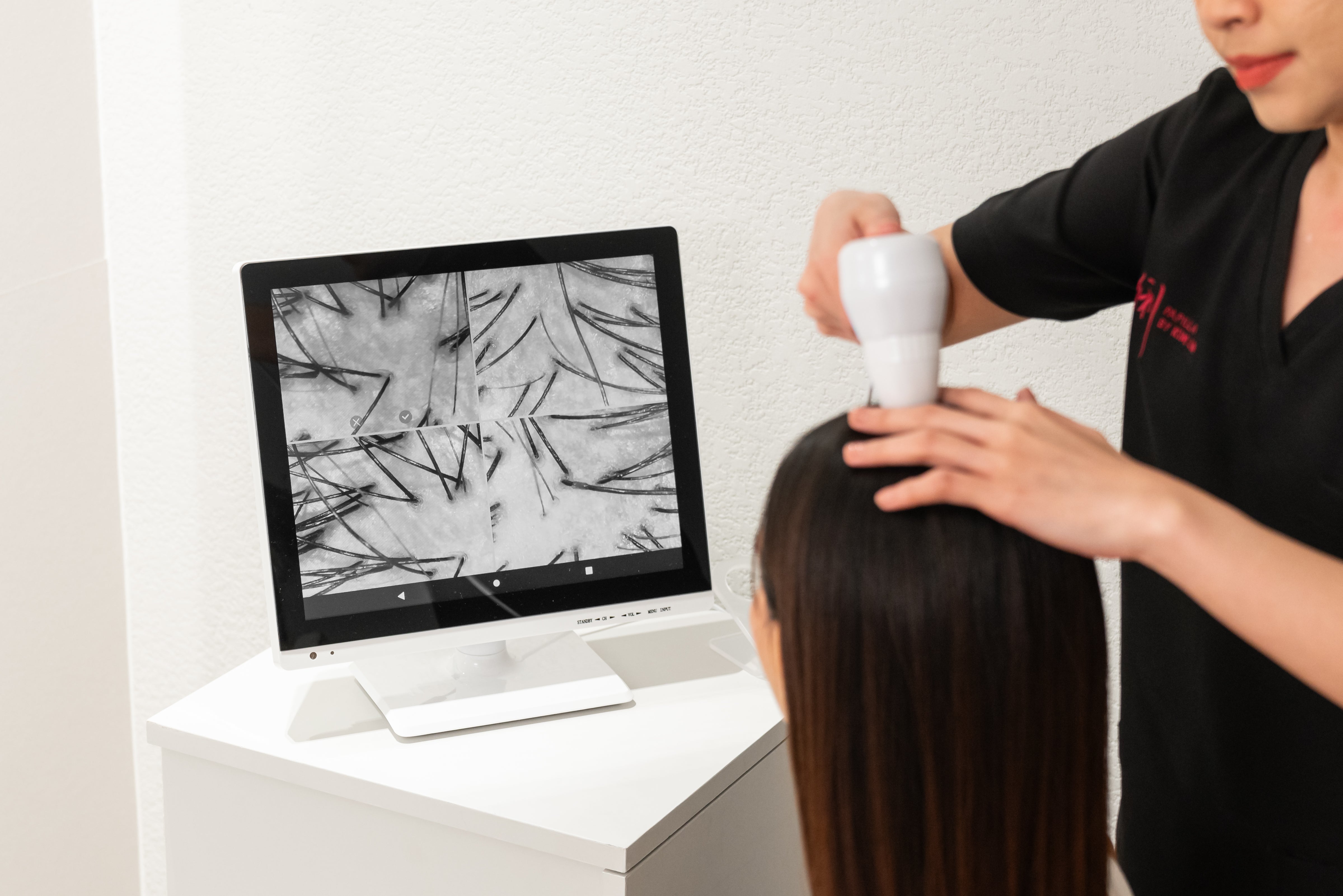
Using advanced technologies such as Micro Bubble DNA Cleansing, SEP Scalp Electroporation®, LLL Therapy to stimulate hair roots and scalp.
-
Suitable for those who want to start taking care of their scalp early. It gives results from the time the scalp starts to deteriorate.
Additional tips for Gen Z who want to prevent premature hair loss
-
Adjust your sleep pattern to 7–8 hours per night and reduce screen time before bed.
-
Observe your hair style and products used. Avoid pulling/tying your hair tightly and using high heat frequently.
-
Nutritional Supplement — Protein + Iron + Zinc + Vitamin D
-
Let your scalp “breathe” — Wash gently and choose a breathable cap.
-
If you start to notice hair thinning or excessive hair loss, you should start Advance Care Treatment as soon as possible.
For Gen Z, who live life so fast that their bodies can't keep up, don't let "premature hair thinning" become an optional thing.
Start taking care of your hair roots and scalp, and adjust your surrounding behavior to achieve balance.
Let PAPILLA Advance Care Treatment help restore your hair from within, making it thicker, softer, more vibrant, and stronger than ever.

Book now! New customers get a 30% discount on their first trial.*
PAPILLA by KIM LIM Hair & Scalp Centre No.1 from Singapore* is now available for you to experience today.
Elevate your scalp care. Make an appointment or ask for more information at
Line: @papillabykimlimth
Phone: 099 649 2585, 02-116-2528, 02-116-2529
WhatsApp: +66996492585
Business hours: Open daily from 11:00 AM to 8:00 PM.
Location: Erawan Bangkok, 4th floor (BTS Chidlom)
References
-
HERS (2023) “Women and Hair Thinning Report.”
forhers.com -
HairLine Clinic (2023) “Are Millennials and Gen Z Losing Hair Faster and Earlier?”
hairline.com -
Medihair Research (2022) “Statistics: Why Hair Loss is on the Rise.”
medihair.com


